




Centro Cultural España
Centro Cultural España
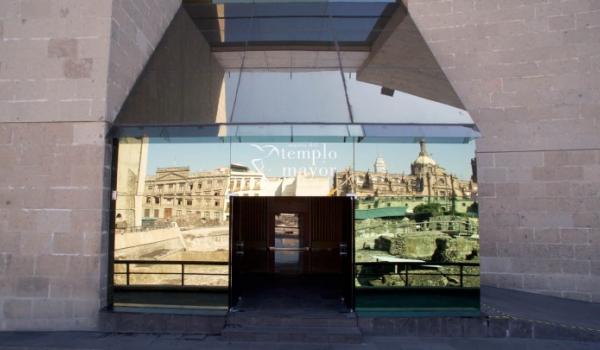
The Site Museum at the Spanish Cultural Center in Mexico displays a building that, based on archaeological evidence, is considered to be part of El Calmecac (Row of Houses).
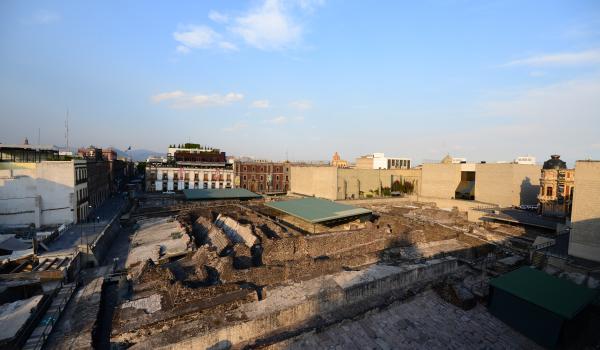
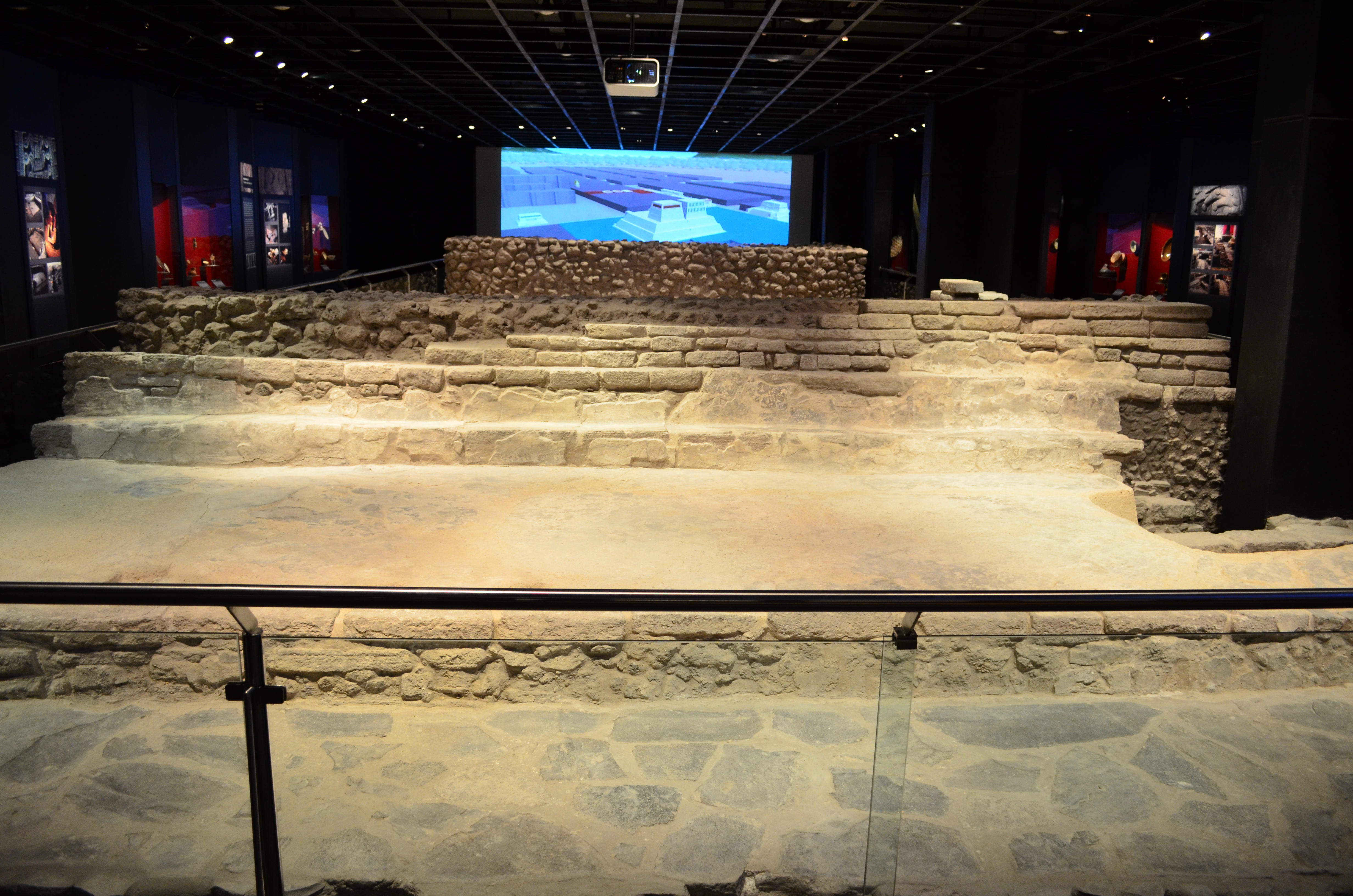
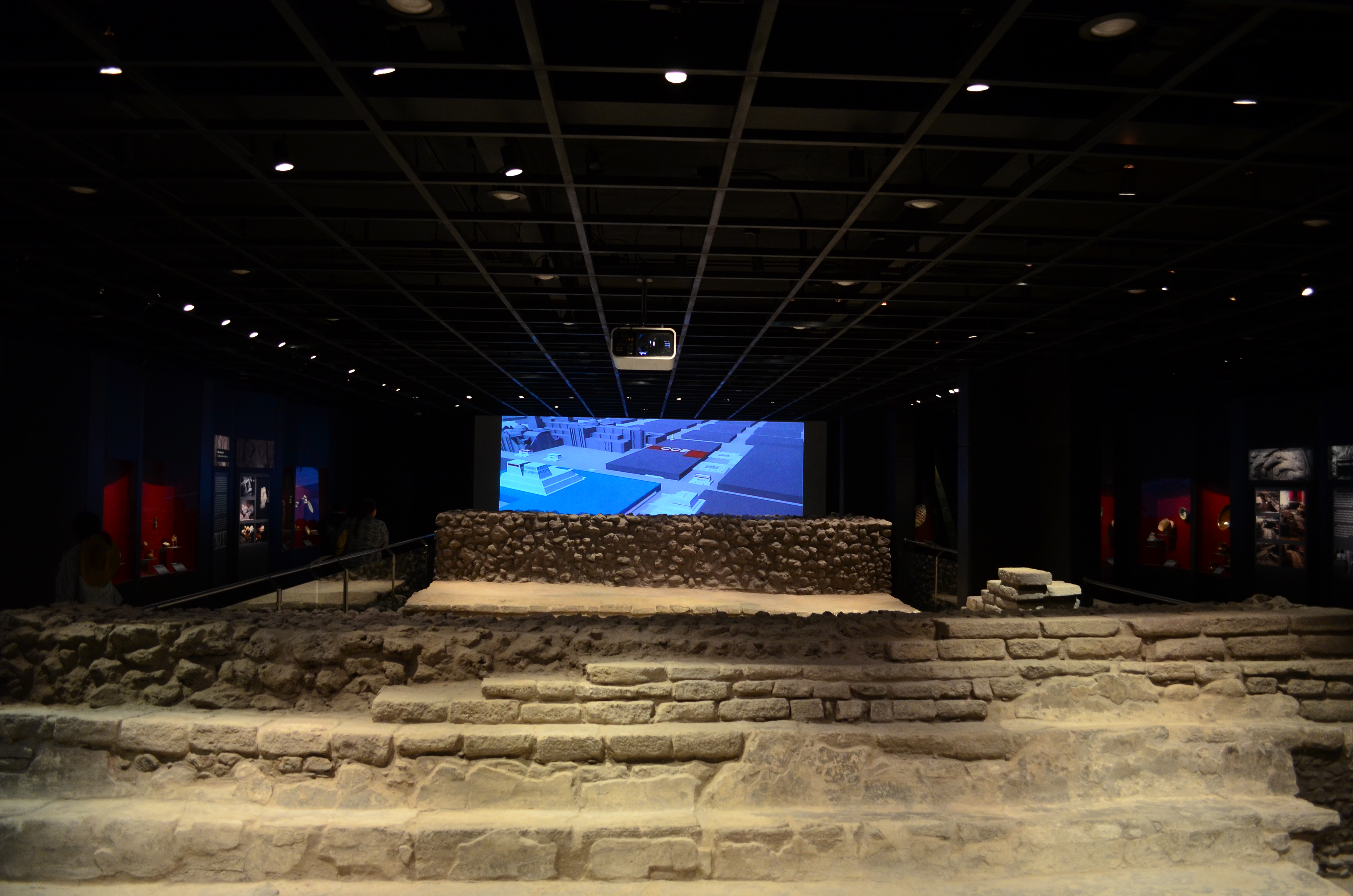
The site museum consists of a museum hall which, in its central section, displays Mexica architectural remains corresponding to two construction stages of rooms with stairways that were accessed from the south through an open plaza.
A fragment of the plaza is represented by a basalt slab floor that serves as the base for a sidewalk and the start of a staircase from stage VII (1502-1519) of the Templo Mayor, during the reign of Moctecuhzoma Xocoyotzin. At the center of the bench, from this same stage, it is still possible to see an east-west drainage system that was covered with engraved slabs depicting human dismemberment.
The penultimate construction stage of the building includes the remains of a room with a stucco floor and the base of pilasters that served to support the roof. Inside, there is a bench attached to a wall made of tezontle stones and mud, corresponding to stage VI (1486-1502 AD), the period of Ahuítzol's reign.
The Calmécac (Row of Houses) was the school where the children of nobles were educated to become priests and where the future rulers of Tenochtitlan were prepared.
At the front ends of the museum interior, as if guarding it, two of the seven cut snail-shaped clay battlements that were discovered during the excavations are on display. In addition to other Mexica objects that are placed in side display cases in the museum space.
The pre-Hispanic remains are protected by a stainless steel and tempered glass barrier, display cases for objects, thematic labels, and screens.
Source: Raúl Barrera Rodríguez, director of the Urban Archaeology Program